gif-icon
search-icon mic-icon
location-marker

Enter your pincode

Explore product availability and delivery choices

27 Jan, 2026 3 Mins

Hair Clippers vs. Trimmers: Which One Should You Use

Comparison Guides All
Hair Clippers vs Trimmers

Barber style results at home are easy when you match the tool to the job. That is why the debate of hair clippers vs. trimmers comes up so often. Both are essential haircut tools, yet they shine in different tasks. This guide explains what each device does, how they differ, and the simple rules to help you choose with confidence for Indian hair types, humidity, and everyday routines.

What are Hair Clippers and Their Uses


Clippers are built for bulk cutting. Think fast, length reduction on the head before shaping. Professional clippers use powerful rotary or magnetic motors with wider blades that move a lot of hair quickly without tugging. They typically ship with multiple guards from 0.5 to 12 mm or more, plus a taper lever to fine-tune the length between guard sizes. Corded clippers run at a steady speed for long sessions, while cordless variants trade a little power for flexibility around the chair. 


Use clippers for all-over buzz cuts, crew cuts, tapering the sides, blending between lengths, and setting an even base before detail work. For home use, a simple set of guards, a cleaning brush, and blade oil covers most needs.


What are Trimmers and Their Uses


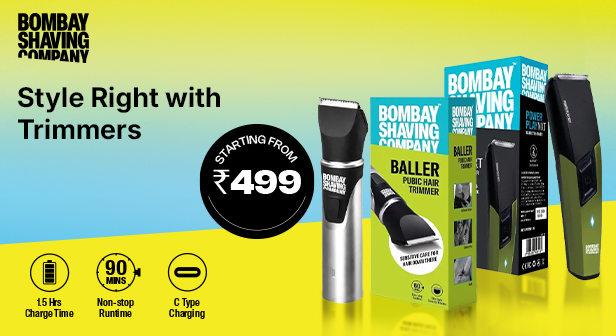
Trimmers are precision tools for detail and edging. The blades are narrower, the teeth are finer, and the cut is closer. Home hair trimmers line up sideburns, tidy necklines, and sharpen beards and moustaches. Personal trimmers can also neaten body hair with sensitive area guards. Cordless trimmers are popular for daily touch-ups because they are light and easy to control. 


Use a trimmer to define borders around the ears, clean the nape, outline a fade, shape your beard, and finish a haircut after clipper work. For close face work, look for rounded tooth tips and hypoallergenic blade coatings that glide without irritation.


Key Differences Between Hair Clippers and Trimmers


Here is the practical difference between a hair clipper and a hair trimmer, you feel in your hand and see in the mirror.

  • Purpose: Clippers remove bulk and set overall length, trimmers create edges and very close lines.

  • Blade width: clippers are wider for speed, trimmers are narrow for accuracy.

  • Guards: Clippers ship with many long guards, trimmers use short guards or none for close edging.

  • Motor and torque: clippers emphasise power to move through dense hair, trimmers focus on control for fine areas.

  • Finish: clippers give even length, trimmers give crisp outline.


How to Choose Between Hair Clippers and Trimmers


Start with your goal and routine, then decide on a hair clipper vs. a hair trimmer for each task.

  • Full haircuts at home: choose a robust clipper with guards and a taper lever. Add a basic trimmer later for clean edges.

  • Beard first, hair occasionally: buy a quality trimmer with beard guards and a nose attachment. Borrow or buy a budget clipper for rare full cuts.

  • Barber style fades: you will want both, plus combs for a clipper over comb and a trimmer that can edge cleanly around the ear.

  • Travel-friendly: cordless trimmers pack small and charge by USB-C on newer models.

  • Budget picks: a single mid-range clipper plus a razor can handle haircuts until you add a trimmer for a finish.


If the main power is unreliable, cordless kits with long battery life are a safe bet. For all-day usage, corded clippers keep a constant pace in warm rooms.


Tips for Using Hair Clippers and Trimmers Safely


  • Prep clean, dry hair so blades glide and guards do not clog.

  • Comb with the grain to see true length before cutting.

  • Start longer than you think, then step down the guards gradually.

  • Keep skin flat with your free hand for edging round ears and neck.

  • Oil blades with a drop on each side before and after use. Run for ten seconds and wipe the excess.

  • Disinfect blades after each session, especially for shared devices.

  • Charge fully and avoid running batteries to zero every time to preserve the life of cordless models.


Common Mistakes to Avoid While Using Hair Tools


  • Pressing too hard. Let the blade do the work to avoid scratches and uneven patches.

  • Skipping the taper lever. Tiny lever moves smooth guard steps for cleaner blends.

  • Using a trimmer for bulk removal. It overheats and snags, and the finish looks choppy.

  • Rushing the neckline. Outline with a trimmer, then shave below the line if you prefer skin clean.

  • Cutting wet with clippers. Moisture hides true length and dulls blades faster.

  • Ignoring maintenance. Mix hair dust plus oil cake into a paste. Clean guards, brush your teeth, and store tools dry.


Conclusion


Clippers and trimmers are partners, not rivals. Use clippers to set the length quickly and evenly, then switch to a trimmer to define and perfect. With a little practice, both corded clippers and cordless trimmers give barbershop confidence at home. Build a simple kit, keep blades clean and oiled, and work in slow, measured passes. Your cuts will look sharper, last longer, and feel more comfortable on the scalp and skin.

Frequently Asked Questions

Faq1

faqsQuestions
Which is better, a trimmer or a clipper?
faqsAnswer

Neither wins on every job. Clippers excel at removing bulk and setting even length across the head. Trimmers are best for edging, shaping beards and moustaches, and cleaning necklines. For regular home cuts, use a clipper first, then a trimmer for detailing and finishing.

Faq2

faqsQuestions
Can I use my clippers as a trimmer?
faqsAnswer

You can switch to a lower guard or no guard, but clipper blades are wider and less precise round ears and tight edges. For a crisp outline without nicks, a proper trimmer with fine teeth and a narrow head is safer and more accurate, especially on curved areas.

Faq3

faqsQuestions
Which is better: trimmer or groomer?
faqsAnswer

A groomer usually means a multi-attachment device for beard, body, and sometimes hair. Trimmers focus on close control for beard and edges. If you want one tool for varied tasks, a groomer is handy. If you want the sharpest beard lines and hair edges, a dedicated trimmer is superior.